
Vascular Surgery in New Jersey
Advanced Vascular Care at Hackensack Meridian Health
Hackensack Meridian Health provides comprehensive vascular surgery in New Jersey, offering advanced open and minimally invasive treatments for blood vessel and circulatory conditions.
As New Jersey’s #1-ranked health network by U.S. News & World Report, we combine innovation, precision and compassionate care to help patients restore circulation and prevent life-threatening complications.
Our board-certified vascular surgeons in New Jersey are highly trained in diagnosing and treating complex conditions involving the arteries, veins and lymphatic system.
From minimally invasive procedures to traditional open surgeries, we provide personalized care using the latest surgical techniques and technology at our vast network of hospitals across New Jersey.
Vascular Conditions We Treat
Arterial disorders are conditions that affect the arteries, which are the blood vessels responsible for carrying oxygen-rich blood from the heart to the rest of the body. These disorders often involve the narrowing, blockage, or weakening of arterial walls.
- Peripheral Artery Disease (PAD): Narrowing or blockage of arteries can reduce blood flow to the limbs, most often causing muscle cramping during walking. However, if severe, it can lead to waking from sleep with pain in the feet/toes, non-healing wounds, gangrene and even limb loss.
- Aortic Aneurysms: A bulge in the wall of the aorta (the largest artery in your body, located in the abdomen), which, if large, can burst and be potentially life-threatening.
- Carotid Artery Disease: Narrowing of the large arteries in the neck that supply blood to the brain. If narrowing becomes severe, there is an increased risk of stroke.
- Renal Artery Disease: Narrowing of the arteries that carry blood to the kidneys, which can result in high blood pressure, kidney damage and other conditions.
- Visceral Artery Disease: Severe narrowing of the arteries in the abdomen that supply the intestines and other major organs. This can result in a variety of symptoms that may include abdominal pain after meals and lower GI bleeding.
- Vascular Disease: This disease in the upper extremities may result in arm fatigue and/or ulcerations of the fingertips.
Venous disorders are conditions that affect the veins, which are the blood vessels that carry deoxygenated blood back to the heart. These problems often relate to blood clots or the improper functioning of vein valves.
- Deep Venous Thrombosis (DVT): A blood clot in a deep vein, most often in the leg, but which can also occur in the upper extremities. DVT can cause significant symptoms of pain and swelling and can result in a life-threatening pulmonary embolism if left untreated.
- Chronic Venous Insufficiency: This condition causes backwards flow in the superficial (saphenous) and/or deep veins in the legs, which can result in the following symptoms: varicose veins, leg pain, swelling, numbness, cramping, skin discoloration, leg ulcerations/wounds, which may be painful and heal slowly or not at all without treatment
Compressive and structural vascular conditions consist of syndromes caused by the compression of blood vessels by surrounding structures, as well as surgically created vascular access for medical treatment.
- Compressive Vascular Syndromes: These syndromes encompass nutcracker syndrome, median arcuate ligament syndrome (MALS) and other related conditions.
- Thoracic Outlet Syndromes (TOS) - Venous, Arterial and Neurogenic: A group of conditions caused by compression of nerves and/or blood vessels (the neurovascular structures) as they pass through the thoracic outlet, the space between the lower neck and upper chest, bordered by the first rib and collarbone (clavicle).
- Dialysis Access: Surgically created connection that allows easy and repeated access to the bloodstream.
Vascular Services We Offer
Hackensack Meridian Health uses advanced vascular imaging and diagnostic tests to detect diseases early and inform treatment decisions.
Noninvasive Vascular Lab
- Segmental pressures and Pulse Volume Recordings of the extremities: These tests measure the flow of blood through the arteries to determine if it is normal, mildly
abnormal, moderately abnormal or severely abnormal. - Duplex ultrasound of arteries and veins: This allows for the visualization of any plaque within the blood vessels. This test also allows surgeons to see the blood flow and detect blockages or narrowing.
Invasive Testing
- Angiography and Intravascular Ultrasound: These tests can be used during a procedure to help surgeons obtain a more detailed diagnosis. They can also allow for treatment during the procedure.
Vascular Treatment Options
Endovascular surgery offers a less invasive alternative to traditional open procedures by using catheters and small incisions. Benefits include reduced pain, shorter hospital stays and quicker recovery. Your vascular surgeon will determine whether an endovascular approach is appropriate for your condition.
We offer the following endovascular procedures at specialized centers across New Jersey:
- Angioplasty and stenting of arteries and veins throughout the body (excluding the heart and brain): These catheter-based procedures are done to open narrowed or blocked arteries and veins.
- Endovascular stent grafts for aortic aneurysms in the chest, abdomen and other locations, including complex thoracoabdominal aneurysms: During these procedures, surgeons use fabric-covered metal mesh tubes called stent grafts to strengthen the weakened aortic wall and prevent rupture.
- Endovascular stent grafts for aortic dissections in the chest and abdomen: These less invasive procedures seal the tear and redirect blood flow by using a catheter to insert a stent covered with fabric into the groin or arm.
- Carotid artery angioplasty and stenting: Surgeons use a balloon to open a blocked artery and place a small mesh tube called a stent to keep it open.
- Transcarotid Artery Revascularization (TCAR): This procedure is primarily performed on individuals considered high-risk for traditional open-heart surgery. Surgeons treat carotid artery disease by using stenting and a temporary blood flow reversal system to prevent stroke.
- Closure and treatment of poorly functioning superficial veins and varicose veins (performed in the office): These minimally invasive procedures use local anesthesia, are guided by ultrasound, and generally allow people to return to normal activities within two days.
- LimFlow and other novel options for limb salvage in patients with no traditional bypass options to treat peripheral arterial disease: This procedure helps reroute blood flow using a nearby vein, allowing more oxygen to reach the foot.
- Clot-removing treatments for severe cases of deep vein thrombosis and pulmonary embolism: These advanced life-saving treatments are done to remove clots that restrict blood flow. These procedures are generally reserved for those who are unable to use standard blood thinners.
- Clot-removing treatments for patients with sudden loss of circulation to their extremities: These treatments include using medication to dissolve the clot or physically removing it under catheter-directed therapies.
- Median arcuate ligament release: This surgical procedure relieves compression of the celiac artery by the median arcuate ligament, a fibrous band of tissue located near the diaphragm.
- Coil embolization of small visceral aneurysms: Tiny platinum coils are used to fill a small visceral artery aneurysm and block blood flow to prevent a rupture.
- Thrombin (liquid) injections for treatment of groin and wrist pseudoaneurysms following cardiac cath and other interventions: Liquid thrombin is injected directly into a pseudoaneurysm under ultrasound guidance to promote clotting and seal the vessel.
In some cases, you may benefit from a traditional open surgery. Our skilled surgeons offer the following traditional surgeries:
- Open abdominal aortic and iliac aneurysm repair: Surgeons replace the weakened area of the aorta and iliac arteries with a fabric graft.
- Carotid endarterectomy surgery: A surgical procedure to remove plaque from the carotid artery in the neck.
- Thoracic outlet syndrome surgery: During this procedure, surgeons relieve compression of the nerves, veins, or arteries in the space between the first rib and collarbone.
- Fistula or graft creation for hemodialysis access in patients with renal failure: This procedure is performed to make a vein thicker and stronger, so it can withstand the repeated needle sticks required for dialysis.
- Leg bypass and revision bypass surgery: Surgeons reroute blood flow around a blocked artery in the leg to treat peripheral artery disease (PAD).
- Median arcuate ligament release: A surgical procedure done to treat median arcuate ligament syndrome (MALS), which is a condition where the median arcuate ligament of the diaphragm compresses the artery that supplies blood to the stomach, liver and surrounding nerves.
Medication is often used after surgery to help ensure your arteries remain clear, allowing you to live a healthy and fulfilling life. Medication may be used to control:
- Blood pressure
- Cholesterol
- Other risk factors
In addition to medication, your doctor may recommend that you make some lifestyle changes to improve your vascular health. Some options to improve your vascular health without medication or surgery may include:
- Diet
- Exercise
- Smoking cessation
Take the First Step Toward Better Vascular Health
If you’re experiencing leg pain, swelling, numbness, or non-healing wounds, it may be a sign of poor circulation. Find a vascular surgeon or vascular surgery center today.
Hackensack Meridian Health offers access to expert vascular specialists across New Jersey who can help you improve blood flow and overall health.
Why Choose Hackensack Meridian Health For Your Vascular Surgery
- Specialized Training: Our expert team of vascular surgeons has the highest level of training possible and uses the latest technology to treat a wide range of vascular diseases that impact the blood vessels and arteries outside of the heart and brain.
- Award Winning Care: U.S. News and World Report ranked Hackensack University Medical Center the best Cardiology, Heart & Vascular Surgery program in New Jersey for 2025-2026.
- Academic Excellence: Hackensack Meridian Health vascular surgeons perform procedures at Hackensack University Medical Center, a premier academic medical center.
- Comprehensive care: Our vascular surgeons believe in a multidisciplinary approach to care. They work closely with Hackensack Meridian Health heart and vascular specialists, podiatrists, wound specialists and primary care specialists to ensure you receive the highest level of care.
We’re dedicated to improving your circulation, mobility and quality of life—so you can get back to doing the things that matter most.
- Clinical Trials: Hackensack Meridian Health is at the center of vascular surgery research. To ensure our patients have access to the most advanced care, we offer access to groundbreaking clinical trials.
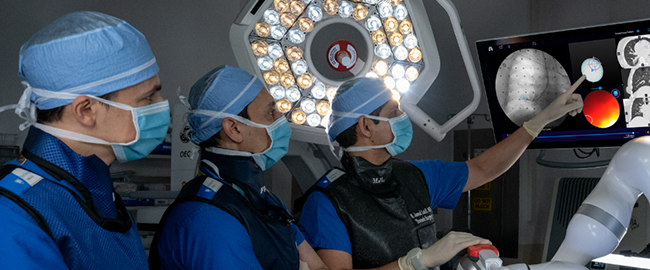
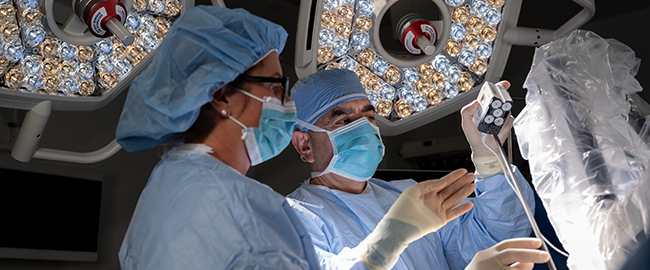
- Endovascular Surgery Experts: Our vascular surgeons perform procedures in advanced hybrid operating rooms, which provide them with the flexibility to perform both traditional and minimally invasive procedures. They are also skilled in utilizing the latest technology and procedures.
Frequently Asked Questions
Doctors use several imaging and blood flow tests to detect vascular disease early, such as:
- CT or MR angiography
- Duplex ultrasound
- Arteriography
- Ankle-Brachial Index (ABI)
- Transcutaneous Oxygen Measurement (TcPO₂)
Hackensack Meridian Health offers care from highly trained, board-certified vascular surgeons who use the latest surgical techniques.
They also perform procedures at Hackensack University Medical Center—ranked New Jersey’s top program for Cardiology, Heart & Vascular Surgery.
Several treatments can open blocked or narrowed arteries in the legs, including:
- Balloon angioplasty
- Stent placement
- Atherectomy
- Intravascular lithotripsy
- Bypass or LimFlow procedures to reroute blood flow