
HMCH Brings Clinical Trials for Rare Pediatric Brain Tumors to Tristate Area
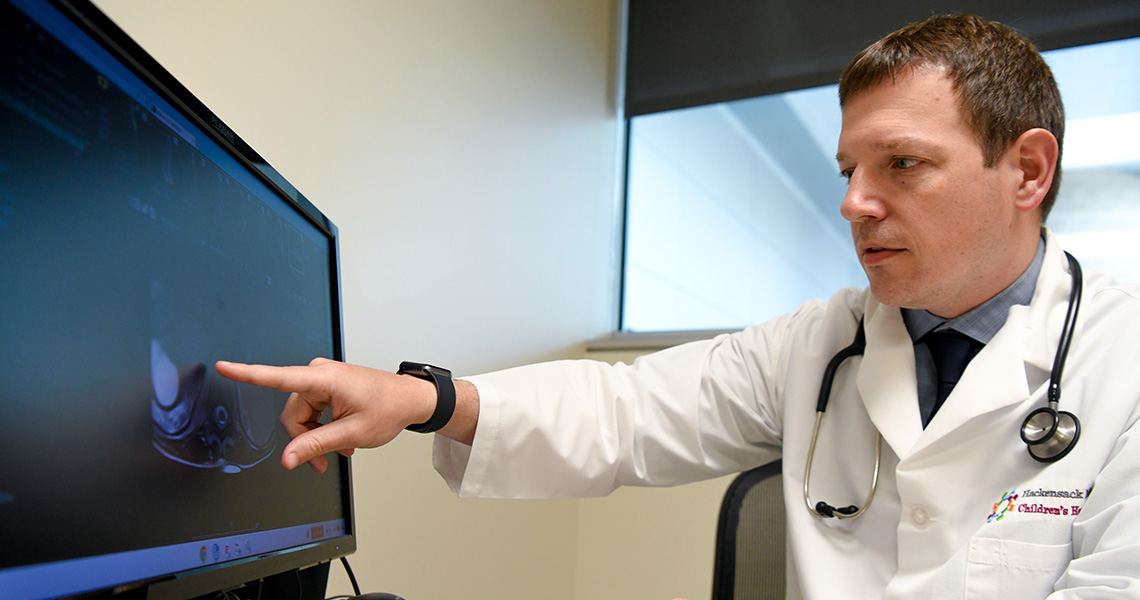
Hackensack Meridian Children’s Health is the only pediatric health network in the tristate area participating in two clinical trials through the Pediatric Neuro-Oncology Consortium (PNOC) to explore new therapies for children diagnosed with rare, aggressive brain tumors that lack a standard of care or have few available treatment options.
PNOC Embryonal Tumor with Multilayered Rosettes (ETMR) Trial
Hackensack Meridian Children’s Health researchers are participating in an open-label, comprehensive, iterative investigation evaluating the use of high-dose chemotherapy and focal radiation therapy in children newly diagnosed with ETMR. ETMR is a rare, aggressive, cancerous brain tumor that is typically diagnosed in infants and young children.
“Today, there is no standard of care for ETMR and very little prospective data to help us evaluate new treatment options in the future,” said Derek R. Hanson, M.D., pediatric neuro-oncologist at Hackensack Meridian Children’s Health. “The goal of this study is to look at progression-free survival and overall survival of children who are treated with surgery, high-dose chemotherapy and early focal radiotherapy, as well as those who have metastatic or residual disease.”
Dr. Hanson said the study will also aim to collect blood and cerebrospinal fluid samples to gain a better understanding of the genomic profile of ETMR.
“The study will provide us with the data we need to develop protocols for more effective ETMR treatment and pave the way for the investigation of new treatment options in years to come,” said Dr. Hanson.
PNOC Metformin Ependymoma Study
Hackensack Meridian Children’s Health researchers are investigating whether a common diabetes medication called metformin can be used to treat recurrent or progressive posterior fossa Group A (PFA) ependymoma, a rare, aggressive type of brain tumor in children.
“When PFA ependymoma returns or continues to grow after surgical and radiation treatment, young patients have few treatment options,” said Dr. Hanson. “We have learned that PFA ependymoma changes the way cells use energy, so we want to explore whether drugs that affect cell metabolism such as metformin could regulate cell activity and slow tumor growth.”
Researchers will analyze tumor samples before and after treatment to assess whether metformin reaches the tumor, acts on tumor cells, and helps control tumor growth.