When Your Stomach Stops Working: Finding Hope with Gastroparesis

November 25, 2025
Cara Morelli felt like she was running on empty. For days, the 31-year-old from Manalapan, NJ, couldn't keep any meals or drinks down and was starting to lose hope.
“I thought I had a stomach virus, I couldn’t eat any food without becoming nauseous,” she recalls.
Piecing Together The Clues
At first, Cara thought it was food poisoning or an allergy. She tried everything to feel better—taking vitamins, changing her diet and even getting IV fluids at a local medspa. But nothing worked.
After days of not eating, Cara’s mother urged her to go to the emergency department at Jersey Shore University Medical Center.
Since Cara couldn’t eat or drink, her body had no fuel. The doctors needed a way to give her energy that skipped the stomach completely. They used a special method called Total Parenteral Nutrition (TPN) therapy.
How Total Parenteral Nutrition Therapy Works
- Direct Delivery: A special liquid food is sent directly into the bloodstream through a small tube.
- Bypasses the stomach: This method completely skips the normal digestive system, letting the stomach and intestines rest.
- Instant Energy: The liquid contains nutrients and energy the body needs, already broken down and ready to use.
While TPN was helping, it still didn’t answer why she was feeling this way.
Consulted by the gastroenterology team, they determined that Cara had gastroparesis.
What is Gastroparesis?
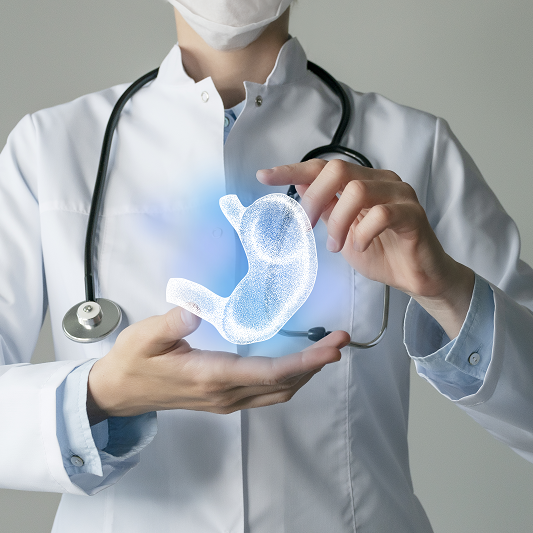
Your stomach is a strong muscle that squeezes to push food through your body. With gastroparesis, that muscle becomes weak and slow.
- A “Sluggish” Stomach: The stomach muscles don’t squeeze hard enough to empty out all the food. It’s like the stomach is moving in slow motion.
- Food Gets Stuck: Because the stomach doesn’t empty the right way, food sits inside the stomach for a very long time.
- Who It Affects: This can happen to anyone – both men and women, kids or grown-ups.
Cara was connected with gastroenterologist Douglas Weinstein, M.D. and director of GI Motility at Jersey Shore. “Gastroparesis can happen when the vagus nerve is damaged. The muscles of the stomach stop working right,” said Dr. Weinstein. “Food then moves slowly, or in Cara’s case, stops moving completely.”
While the TPN provided Cara with the necessary nutrition to strengthen her, it wasn’t a long-term solution.
Dr. Weinstein partnered up with surgeon Seth Kipnis, M.D., director of Bariatric and Robotic Surgery at Jersey Shore, to offer Cara an advanced solution – a gastric electrical stimulator.
What is Gastric Electrical Stimulation?
This therapy is like a pacemaker for your stomach. It’s used to help a stomach that is weak or slow (like in gastroparesis). Here’s how it works:
- An Implanted Device: A small device is implanted in the body that sends out short, gentle pulses of electricity to the stomach.
- Waking Up the Stomach: These electrical signals help “wake up” the stomach muscles and remind them to work properly.
“Dr. Weinstein and Dr. Kipnis are fantastic; they spent time with me to tell me what to expect and how this could work for me,” Cara explained.
To make sure this kind of therapy would work for Cara, her doctors recommended a temporary stimulator that would be placed endoscopically.
- Endoscopic Trial: Her doctors placed a temporary version of the stimulator into her stomach using an endoscope – a long flexible tube that goes through the mouth, throat and into the stomach.
- Successful Testing: The temporary device was successful. Cara’s stomach problems improved, which meant the permanent device would likely work for her as well.
Getting Back to Normal Life
Using minimally invasive robotic surgery, Drs. Weinstein and Kipnis placed the electrical stimulator for Cara.
“They put me at ease, the surgery went well, and before long, my symptoms almost completely disappeared,” said Cara. “I can eat and drink again now. I’ve even enjoyed steak! I’m very happy that I was able to receive this advanced treatment close to home, and grateful for the wonderful care provided by my doctors and nurses.”
Cara has been able to get back to living her life—traveling, hiking, and spending time with family, without worrying about her stomach.
Next Steps & Resources
- Meet our sources: Douglas Weinstein, M.D., director of GI Motility and Seth Kipnis, M.D., FACS, FASMBS, director of Bariatric and Robotic Surgery at Jersey Shore
- To make an appointment with a doctor near you, call 800-822-8905 or visit our website.
- Learn more about gastroentrology services at Hackensack Meridian Health.
The material provided through HealthU is intended to be used as general information only and should not replace the advice of your physician. Always consult your physician for individual care.